Cabinet/access risk, required evidence and service decision
| Cabinet/access risk | Required evidence | Service decision |
|---|---|---|
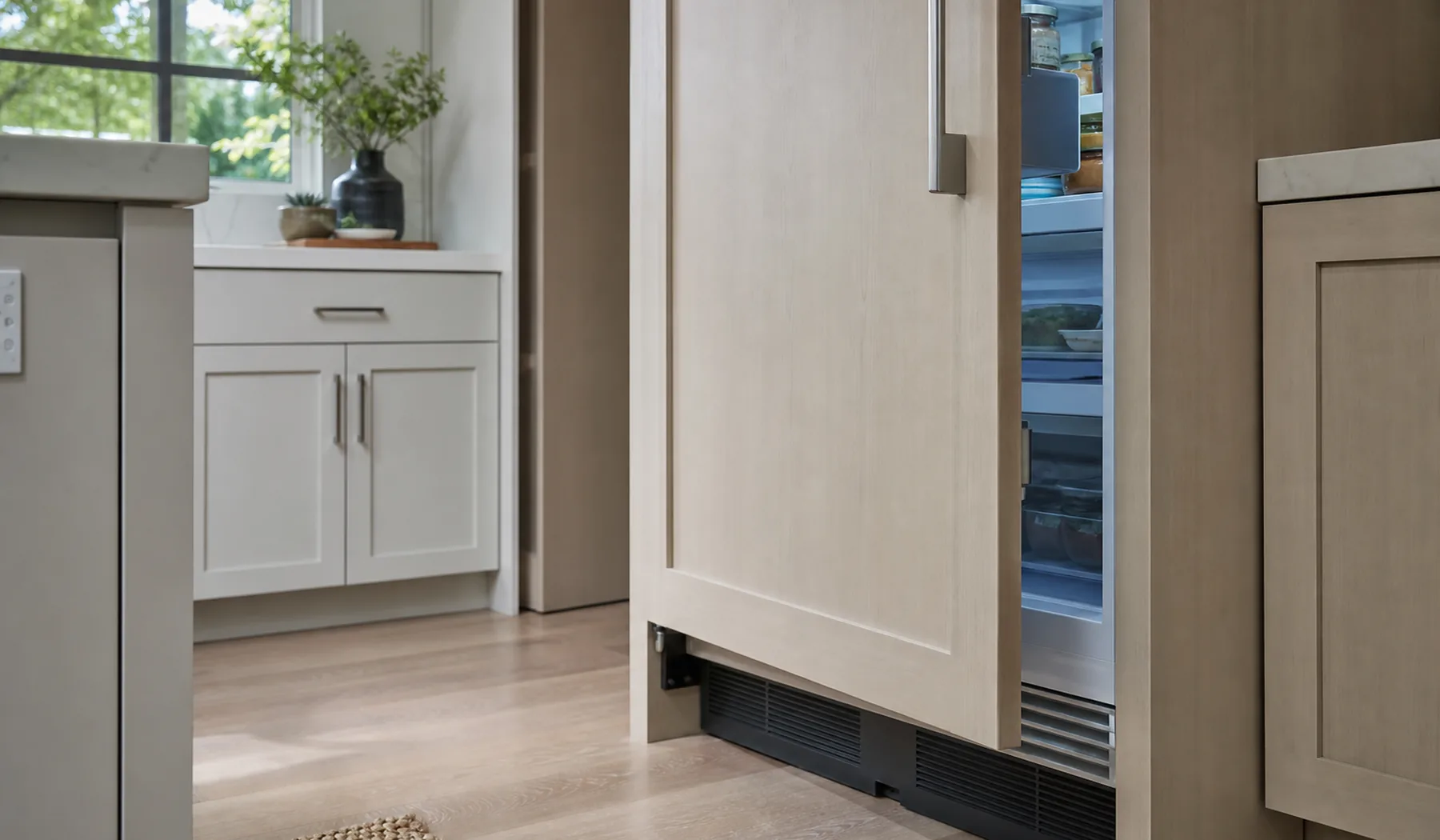
| Custom door panel or overlay | Wide installation view, hinge reveal check and panel weight symptoms | Plan protected access before approving gasket, hinge or pull-out work. |
| Tight lower grille or toe-kick | Grille, floor transition and model tag area | Allow extra time for airflow checks and avoid forcing trim. |
| Water line behind built-in unit | Water source location, slack estimate and leak location if present | Do not pull the unit until water and floor protection are planned. |
| Older 600/700 series installation | Serial tag, temperature pattern and cabinet clearance | Confirm part path before discussing replacement or sealed-system work. |
| Hillside or gated access window | Neighborhood, parking and staff/property-manager contact path | Route the visit with a realistic arrival window and access notes first. |
Repair path, planning range and proof required
| Repair path | Planning range | What must be proven |
|---|---|---|
| Diagnostic / service call | $195-$285 | Model, temperatures, airflow, door seal, alarm or display state. |
| Gasket, frost line or hinge correction | $520-$1,150 | Gasket profile, cabinet pressure, hinge alignment and frost location. |
| Ice maker or water path repair | $310-$985 | Water pressure, fill tube, valve response, filter status and module timing. |
| Evaporator or condenser fan motor | $365-$815 | Fan movement, bearing drag, coil load from coastal air and amp-draw evidence. |
| Control, sensor or thermistor path | $395-$1,450 | Electrical proof, error history, thermistor readings and serial range. |
| Compressor or sealed system | $1,850-$4,400 | Amp draw, condenser airflow, pressure evidence, leak suspicion and cabinet access conditions. |
Planning ranges are published for decision support. The final quote depends on model, serial range, part availability, cabinet access and diagnosis.
What not to approve before diagnosis
- A compressor or sealed-system replacement from a symptom description alone.
- A control board before the model/serial range and electrical evidence are checked.
- A cabinet pull-out before floor protection, water/electrical slack and panel clearance are documented.
- A full replacement recommendation without comparing repair range, part lead time and cabinet disruption.
Pull-out risk table
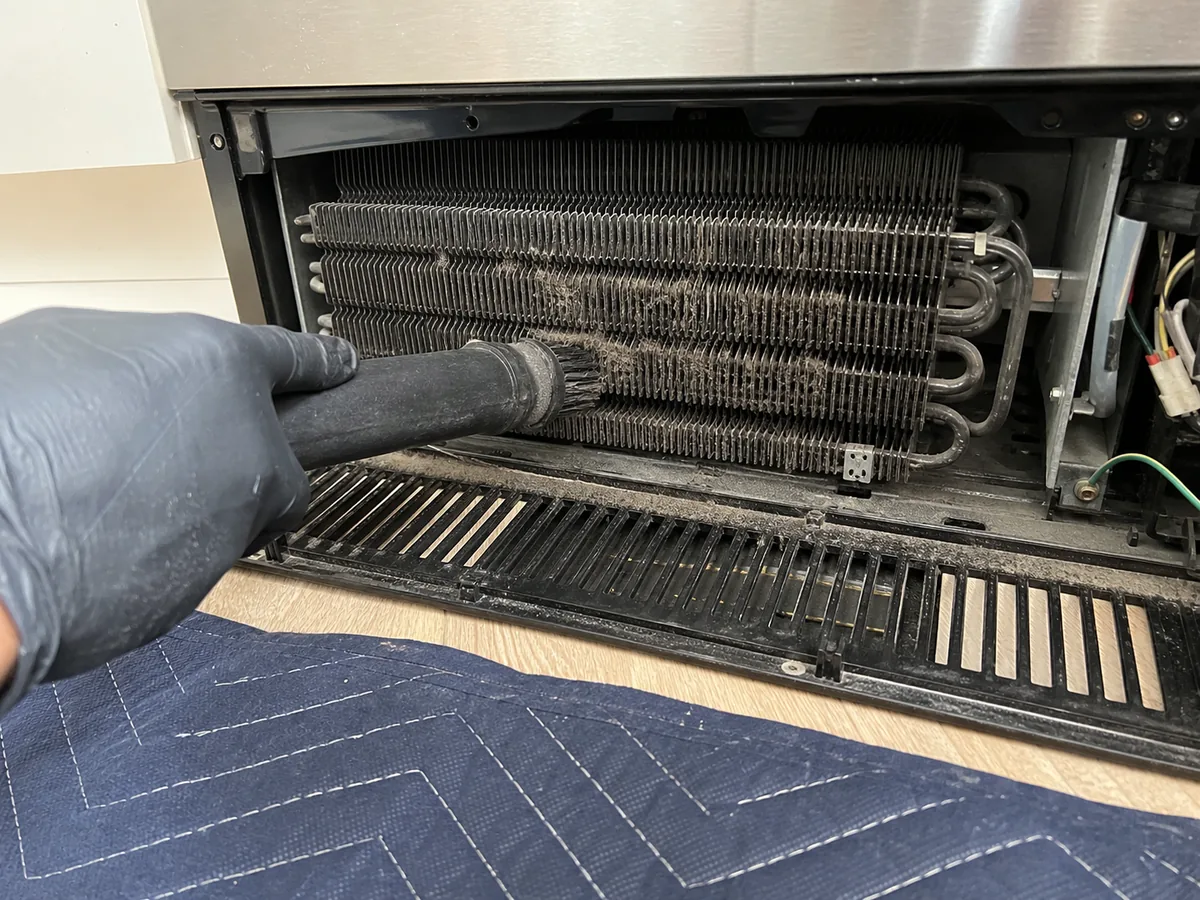
Pull-out work is not a normal first step for every built-in. Many airflow, gasket, fan, sensor, drain and ice maker checks can begin from the front, grille or accessible service area. Movement should be part of the plan only when the symptom, model and evidence justify it.
| Pull-out risk | Evidence to collect | Decision rule |
|---|---|---|
| Stone or hardwood floor | Floor transition and appliance base condition. | Protect floor before movement; avoid same-day pull-out if protection is not ready. |
| Custom panel weight | Panel reveal, hinge side and closing behavior. | Check alignment before blaming gasket alone. |
| Short water line | Water source location and leak pattern. | Confirm shutoff and slack before movement. |
| Tight opening | Side reveal and top grille condition. | Test from front first if possible. |
| Older integrated unit | Model/serial tag and cabinet age clues. | Confirm part path before disturbing installation. |
Cabinet protection sequence
The safe sequence is visible inspection, model confirmation, temperature or water evidence, access plan, floor protection, movement only if needed, repair or diagnostic test, reseat, leveling and door closure verification. The reseat step matters because a repaired cooling system can still fail performance if the door no longer closes evenly.
For gasket or frost-line symptoms, the cabinet panel can be part of the cause. Panel pressure, hinge sag, leveling and reveal can prevent even gasket contact. Replacing a gasket without checking closure can leave the underlying leak in place.
When cabinet work changes the quote
A quote can change when access requires two people, additional protection, a second visit, a plumber for a stuck water valve or a pause for part confirmation. Those conditions should be explained before approval instead of appearing after the appliance has been moved. On larger properties the same conditions sit inside the estate service protocol, which treats access as part of the quote rather than a surprise.
How a built-in Sub-Zero is serviced without cabinet damage
The cabinet-safe sequence for panel-ready Sub-Zero units over stone or hardwood floors in Hillsborough.
- Inspect from the front. Review the grille, panel reveal and model tag before considering any movement.
- Confirm model and temperatures. Match the serial range and record readings to route the first test.
- Test accessible points first. Check airflow, fan, gasket, drain and ice-maker behavior without pulling the unit.
- Plan protected movement only if needed. Quote floor protection, slack and clearance as the $285-$690 add-on before approval.
- Reseat and verify. Re-level, close the door, and recheck the reveal and temperatures after service.