Cabinet/access risk, required evidence and service decision
| Cabinet/access risk | Required evidence | Service decision |
|---|---|---|
| Custom door panel or overlay | Wide installation view, hinge reveal check and panel weight symptoms | Plan protected access before approving gasket, hinge or pull-out work. |
| Tight lower grille or toe-kick | Grille, floor transition and model tag area | Allow extra time for airflow checks and avoid forcing trim. |
| Water line behind built-in unit | Water source location, slack estimate and leak location if present | Do not pull the unit until water and floor protection are planned. |
| Older 600/700 series installation | Serial tag, temperature pattern and cabinet clearance | Confirm part path before discussing replacement or sealed-system work. |
| Hillside or gated access window | Neighborhood, parking and staff/property-manager contact path | Route the visit with a realistic arrival window and access notes first. |
Repair path, planning range and proof required
| Repair path | Planning range | What must be proven |
|---|---|---|
| Diagnostic / service call | $195-$285 | Model, temperatures, airflow, door seal, alarm or display state. |
| Gasket, frost line or hinge correction | $520-$1,150 | Gasket profile, cabinet pressure, hinge alignment and frost location. |
| Ice maker or water path repair | $310-$985 | Water pressure, fill tube, valve response, filter status and module timing. |
| Evaporator or condenser fan motor | $365-$815 | Fan movement, bearing drag, coil load from coastal air and amp-draw evidence. |
| Control, sensor or thermistor path | $395-$1,450 | Electrical proof, error history, thermistor readings and serial range. |
| Compressor or sealed system | $1,850-$4,400 | Amp draw, condenser airflow, pressure evidence, leak suspicion and cabinet access conditions. |
Planning ranges are published for decision support. The final quote depends on model, serial range, part availability, cabinet access and diagnosis.
What not to approve before diagnosis
- A compressor or sealed-system replacement from a symptom description alone.
- A control board before the model/serial range and electrical evidence are checked.
- A cabinet pull-out before floor protection, water/electrical slack and panel clearance are documented.
- A full replacement recommendation without comparing repair range, part lead time and cabinet disruption.
Tag location by family
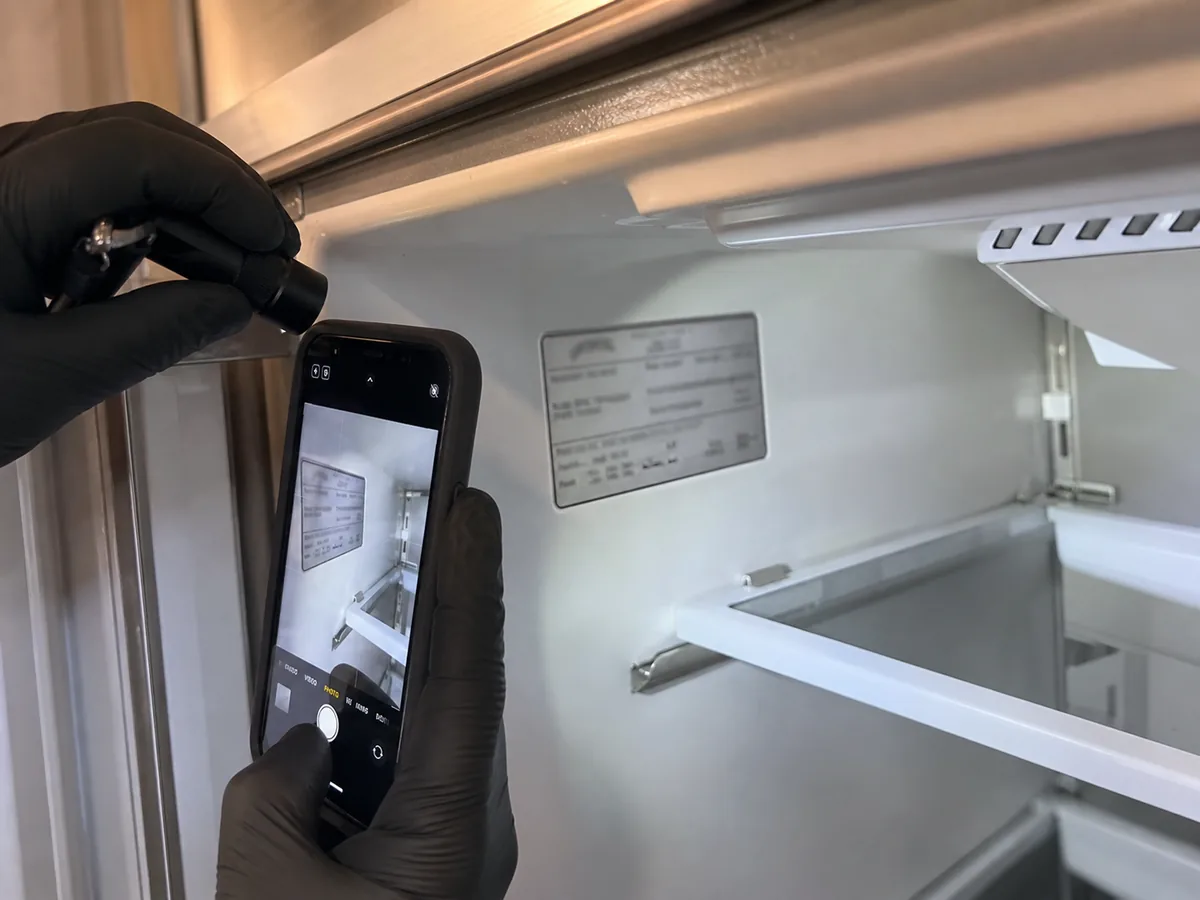
The model tag is the fastest way to prevent a wrong part path. A built-in refrigerator may show the tag near the upper frame, behind the grille or inside a compartment. Integrated columns, drawers and wine units can place the tag differently. If the tag is hard to reach, do not force trim or panels.
| Sub-Zero family | Common tag area | Why the serial matters |
|---|---|---|
| BI built-in | Inside frame, upper area or grille access. | Gasket, fan, board and ice maker revisions. |
| IT integrated column | Interior frame or hinge-side location. | Panel fit and column-specific parts. |
| IC integrated combination | Fresh-food/freezer frame or grille path. | Airflow and control differences. |
| PRO series | Interior frame or service access area. | High-capacity parts and access planning. |
| 600/700 series | Upper frame, grille or compartment edge. | Older serial ranges and part availability. |
| Wine units | Interior zone frame or grille/service area. | Sensor, fan and zone configuration. |
Why model and serial change the quote
A gasket profile, hinge kit, ice maker module, inlet valve, control board, thermistor, fan motor or compressor component can change by model and serial range. Without the tag, the quote has to carry uncertainty. With the tag, the operator can check likely parts and whether a second visit is likely.
For Hillsborough custom installations, the model also tells whether access is likely through the grille, from the front, from a column panel or by protected pull-out. That affects planning even before the failure is tested. That is the foundation the whole Hillsborough Sub-Zero repair process rests on.
Service details checklist
Have the model and serial details, a wide appliance description, the visible symptom and lower-grille or water-line context ready if access is relevant. For wine storage, also capture set point and actual temperature by zone. If the display has shown a code, record it exactly as written; the alarm capture guide explains why the wording matters.
- Do not remove panels just to find the tag.
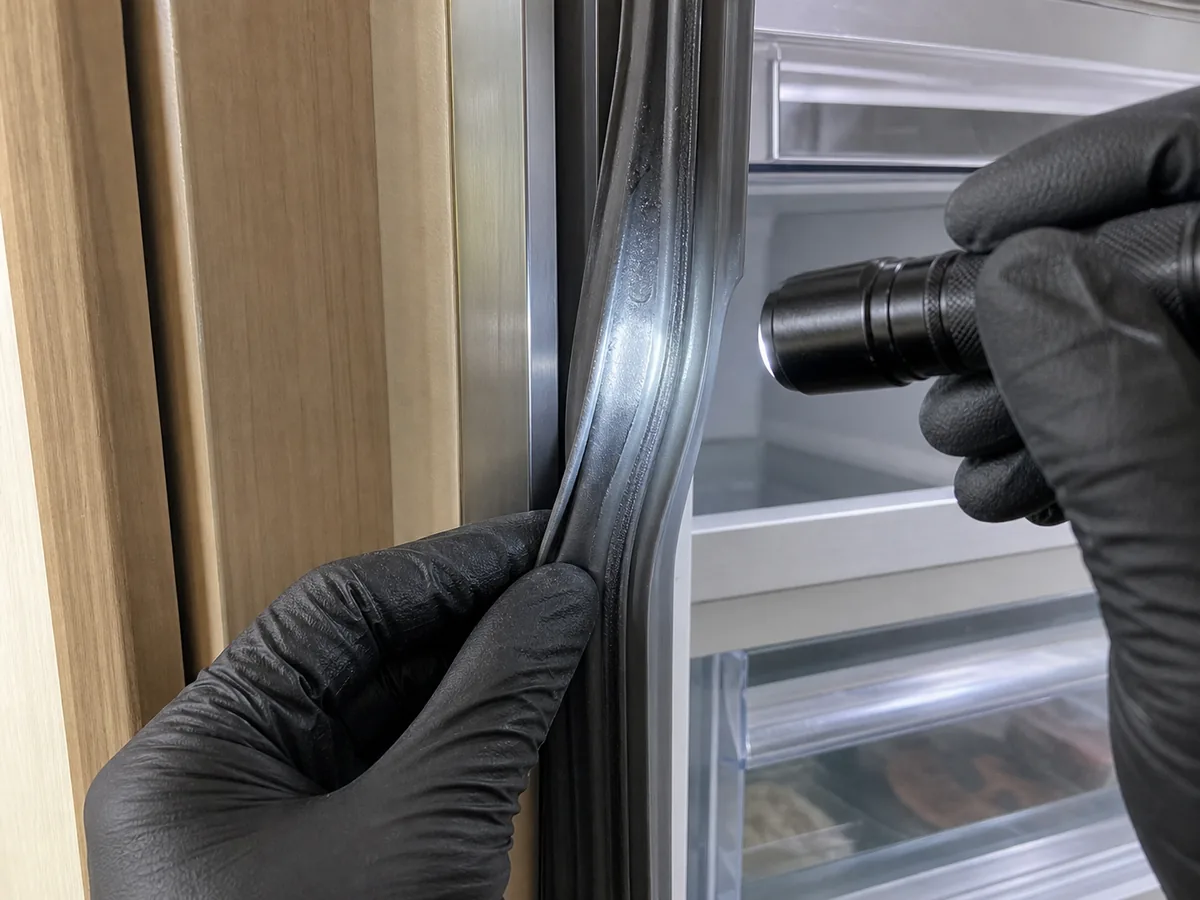
- Use a flashlight if needed so serial numbers are readable.
- Use the whole tag, not only the model line.
- Pair the tag details with the symptom and temperature pattern.
How to find your Sub-Zero model and serial number
Locating the full tag before a Hillsborough visit keeps parts accurate and avoids a second trip.
- Identify the family. Note whether it is a BI built-in, IT/IC integrated column, PRO, 600/700 series or wine unit.
- Check common tag spots. Look inside the upper frame, behind the grille and on the hinge-side interior wall.
- Use a flashlight. Read the full serial, not only the model line, so the serial range is captured.
- Do not force trim. If the tag is not safely visible, confirm it during scheduling instead of removing panels.
- Pair tag with symptom. Send the model, serial and current temperatures together so the right parts are checked.