Cabinet/access risk, required evidence and service decision
| Cabinet/access risk | Required evidence | Service decision |
|---|---|---|
| Custom door panel or overlay | Wide installation view, hinge reveal check and panel weight symptoms | Plan protected access before approving gasket, hinge or pull-out work. |
| Tight lower grille or toe-kick | Grille, floor transition and model tag area | Allow extra time for airflow checks and avoid forcing trim. |
| Water line behind built-in unit | Water source location, slack estimate and leak location if present | Do not pull the unit until water and floor protection are planned. |
| Older 600/700 series installation | Serial tag, temperature pattern and cabinet clearance | Confirm part path before discussing replacement or sealed-system work. |
| Hillside or gated access window | Neighborhood, parking and staff/property-manager contact path | Route the visit with a realistic arrival window and access notes first. |
Repair path, planning range and proof required
| Repair path | Planning range | What must be proven |
|---|---|---|
| Diagnostic / service call | $195-$285 | Model, temperatures, airflow, door seal, alarm or display state. |
| Gasket, frost line or hinge correction | $520-$1,150 | Gasket profile, cabinet pressure, hinge alignment and frost location. |
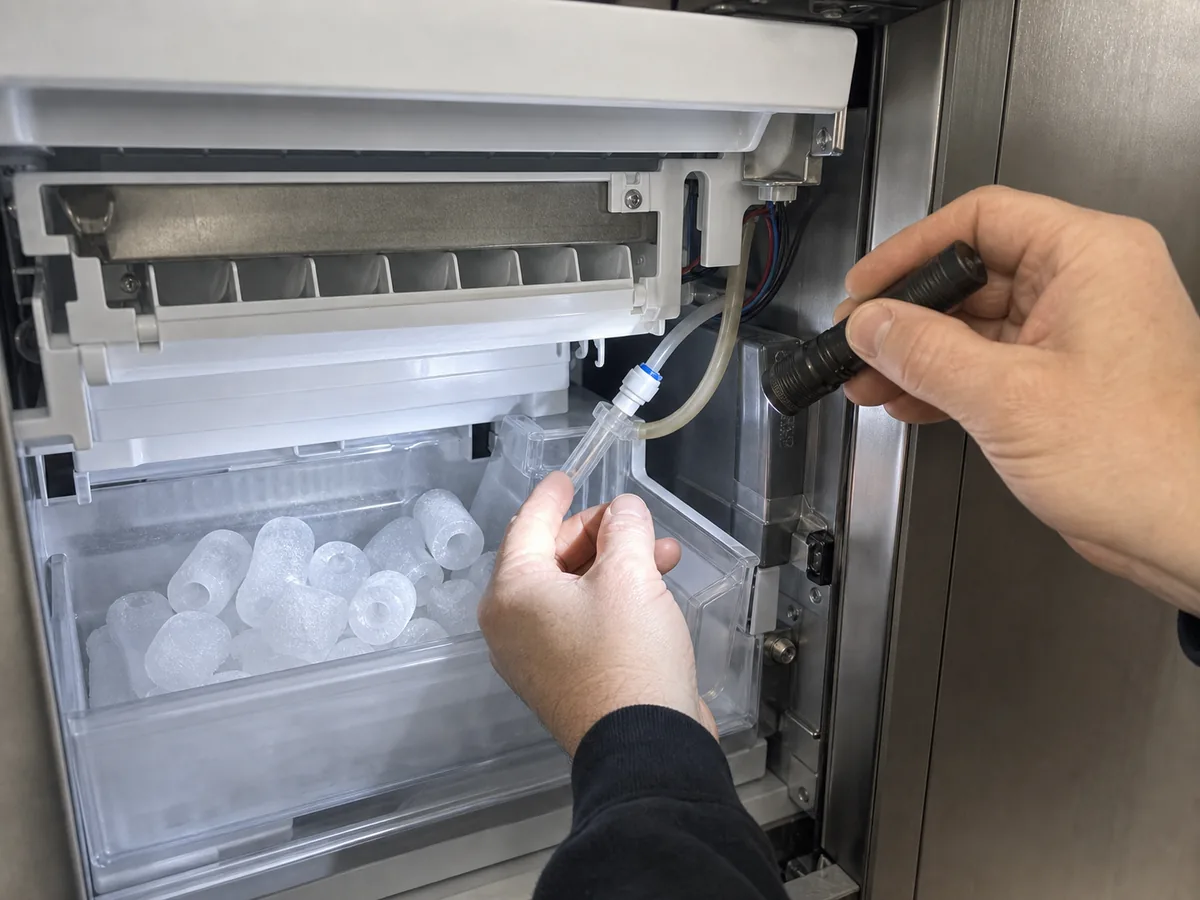
| Ice maker or water path repair | $310-$985 | Water pressure, fill tube, valve response, filter status and module timing. |
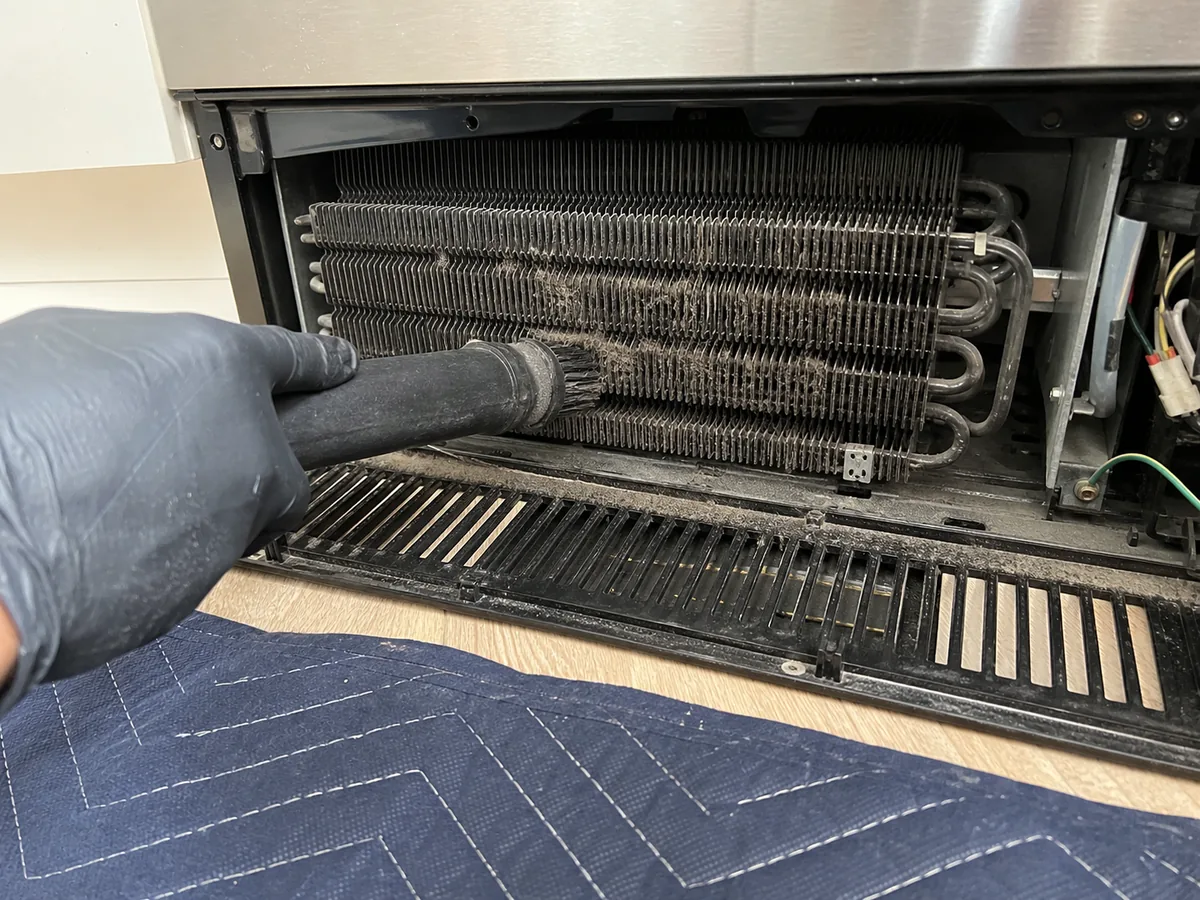
| Evaporator or condenser fan motor | $365-$815 | Fan movement, bearing drag, coil load from coastal air and amp-draw evidence. |
| Control, sensor or thermistor path | $395-$1,450 | Electrical proof, error history, thermistor readings and serial range. |
| Compressor or sealed system | $1,850-$4,400 | Amp draw, condenser airflow, pressure evidence, leak suspicion and cabinet access conditions. |
Planning ranges are published for decision support. The final quote depends on model, serial range, part availability, cabinet access and diagnosis.
What not to approve before diagnosis
- A compressor or sealed-system replacement from a symptom description alone.
- A control board before the model/serial range and electrical evidence are checked.
- A cabinet pull-out before floor protection, water/electrical slack and panel clearance are documented.
- A full replacement recommendation without comparing repair range, part lead time and cabinet disruption.
Separate water supply from ice maker failure
A failed ice maker is not always a failed module. Hollow cubes, slow ice and no fill can point to water pressure, filter restriction, inlet valve, fill tube icing, door switch, temperature issue or module timing. The first visit should separate these causes before ordering parts. Some units flag these conditions themselves; the error codes and alarms page shows how to capture a code before it clears.
For built-in Hillsborough units, water-line access can be part of the plan. A leak or short line behind the unit should not trigger a blind pull-out before floor protection and shutoff access are understood.
| Ice symptom | Likely checks | Service note |
|---|---|---|
| Slow production | Temperature, fill volume, filter and module timing. | Confirm freezer temperature before parts. |
| Hollow cubes | Water pressure, filter and valve response. | Water path usually first. |
| No fill | Valve, fill tube icing, switch and control signal. | Model/serial controls parts. |
| Water under unit | Line, valve, drain and floor protection. | Do not pull before shutoff and floor plan. |
Preparation before the visit
Have the model tag, ice quality, filter age and any water-at-base symptom ready before calling or booking. If the unit has been turned off, mention when. Do not repeatedly cycle the ice maker arm if water is leaking.
When maintenance is related
Temperature drift, dirty condenser airflow or a door leak can reduce ice production. That is why ice maker diagnosis sometimes links back to cooling performance and maintenance instead of stopping at the ice maker assembly. The seasonal maintenance calendar keeps those underlying checks on a schedule.
How to separate a Sub-Zero ice-maker fault from a water-line problem
The order that finds the real cause before a module is replaced on a Hillsborough built-in.
- Note the symptom. Slow ice, hollow cubes, no fill or water at the base each point a different direction.
- Check filter and freezer temp. An overdue filter or warm freezer can reduce ice before any part fails.
- Test the water path. Check supply pressure, the inlet valve and fill-tube icing.
- Confirm shutoff access. Locate a safely reachable shutoff before any movement near the line.
- Repair the proven cause. The $310-$985 repair separates the water path from the ice-maker module.