Cabinet/access risk, required evidence and service decision
| Cabinet/access risk | Required evidence | Service decision |
|---|---|---|
| Custom door panel or overlay | Wide installation view, hinge reveal check and panel weight symptoms | Plan protected access before approving gasket, hinge or pull-out work. |
| Tight lower grille or toe-kick | Grille, floor transition and model tag area | Allow extra time for airflow checks and avoid forcing trim. |
| Water line behind built-in unit | Water source location, slack estimate and leak location if present | Do not pull the unit until water and floor protection are planned. |
| Older 600/700 series installation | Serial tag, temperature pattern and cabinet clearance | Confirm part path before discussing replacement or sealed-system work. |
| Hillside or gated access window | Neighborhood, parking and staff/property-manager contact path | Route the visit with a realistic arrival window and access notes first. |
Repair path, planning range and proof required
| Repair path | Planning range | What must be proven |
|---|---|---|
| Diagnostic / service call | $195-$285 | Model, temperatures, airflow, door seal, alarm or display state. |
| Gasket, frost line or hinge correction | $520-$1,150 | Gasket profile, cabinet pressure, hinge alignment and frost location. |
| Ice maker or water path repair | $310-$985 | Water pressure, fill tube, valve response, filter status and module timing. |
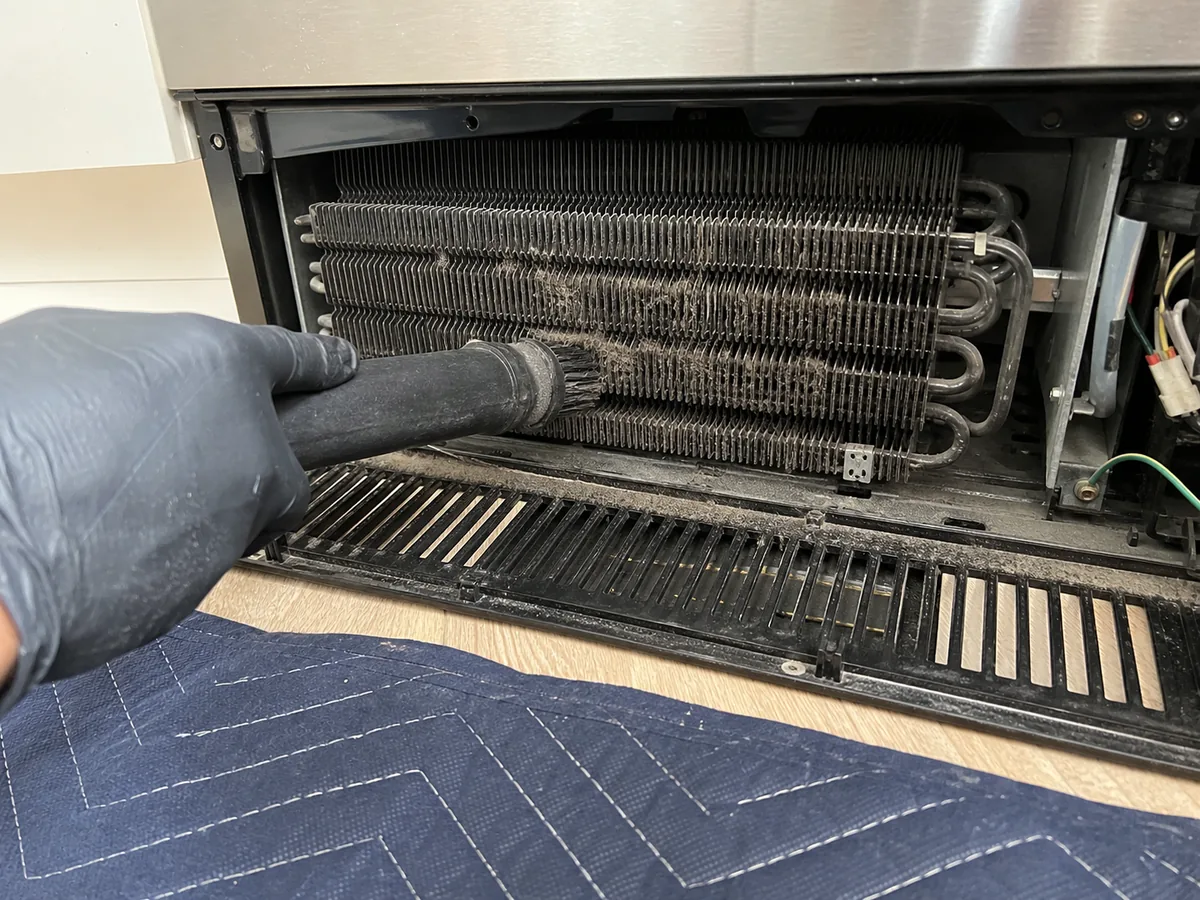
| Evaporator or condenser fan motor | $365-$815 | Fan movement, bearing drag, coil load from coastal air and amp-draw evidence. |
| Control, sensor or thermistor path | $395-$1,450 | Electrical proof, error history, thermistor readings and serial range. |
| Compressor or sealed system | $1,850-$4,400 | Amp draw, condenser airflow, pressure evidence, leak suspicion and cabinet access conditions. |
Planning ranges are published for decision support. The final quote depends on model, serial range, part availability, cabinet access and diagnosis.
What not to approve before diagnosis
- A compressor or sealed-system replacement from a symptom description alone.
- A control board before the model/serial range and electrical evidence are checked.
- A cabinet pull-out before floor protection, water/electrical slack and panel clearance are documented.
- A full replacement recommendation without comparing repair range, part lead time and cabinet disruption.
Temperature drift matrix
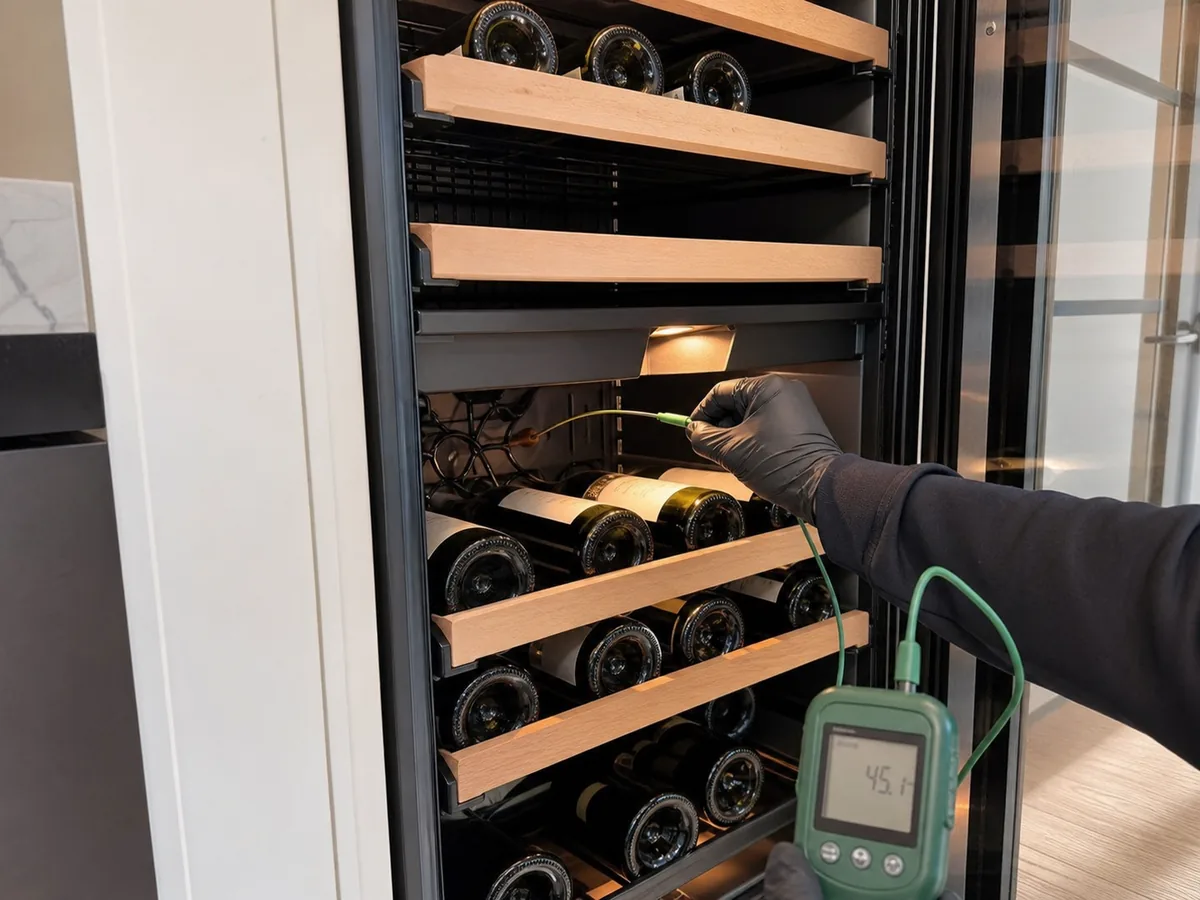
Wine storage calls need a log, not a single display glance. A brief rise after the door opens can recover normally. A slow daily drift, repeated upper-zone rise or failure to recover after condenser cleaning points toward different tests. Hillsborough homes may also have event prep or travel windows where inventory protection matters.
| Wine symptom | Useful evidence | Service decision |
|---|---|---|
| One zone 3-5F high | Set point, actual temp, door history and airflow. | Log for 24 hours before parts if stable. |
| Both zones rising | Condenser airflow, fan behavior and room heat. | Treat as cooling system or airflow priority. |
| Drift after door opening | Recovery time and door-seal contact. | Check gasket and usage before parts. |
| Alarm or display error | Photo before reset and model tag. | Use serial range for control/sensor path. |
| No recovery overnight | Zone log, grille heat and fan response. | Escalate to measured diagnostic and possible sealed-system proof. |
When to move inventory
Move valuable bottles when temperature drift is sustained, rising, tied to repeated alarms or no longer recovering after the door remains closed. If the drift is small and stable, logging by zone can be more useful than moving everything immediately. The decision depends on the wine, set point, duration and owner risk tolerance. Routine zone checks belong on the seasonal maintenance calendar so drift is caught while it is still small.
Evidence before ordering parts
A wine column can drift because of airflow, fan, sensor placement, door seal, condenser load, control behavior or sealed-system performance. The model tag and zone layout matter because parts and sensors are not interchangeable across every family.
How to log Sub-Zero wine-column temperature drift
A short log protects a Hillsborough collection and tells real drift apart from normal recovery.
- Record set point and actual temps. Note both the target and the actual reading for each zone.
- Note door-open history. Log how often the door opened and how long recovery took.
- Watch overnight. A brief rise that recovers is normal; a steady climb is not.
- Check seal and airflow. Inspect the door seal and clean fog-loaded condenser coils.
- Book if sustained. A 5-7 °F climb or no recovery warrants service; thermistor $260-$565, diagnostic $195-$285.