Cabinet/access risk, required evidence and service decision
| Cabinet/access risk | Required evidence | Service decision |
|---|---|---|
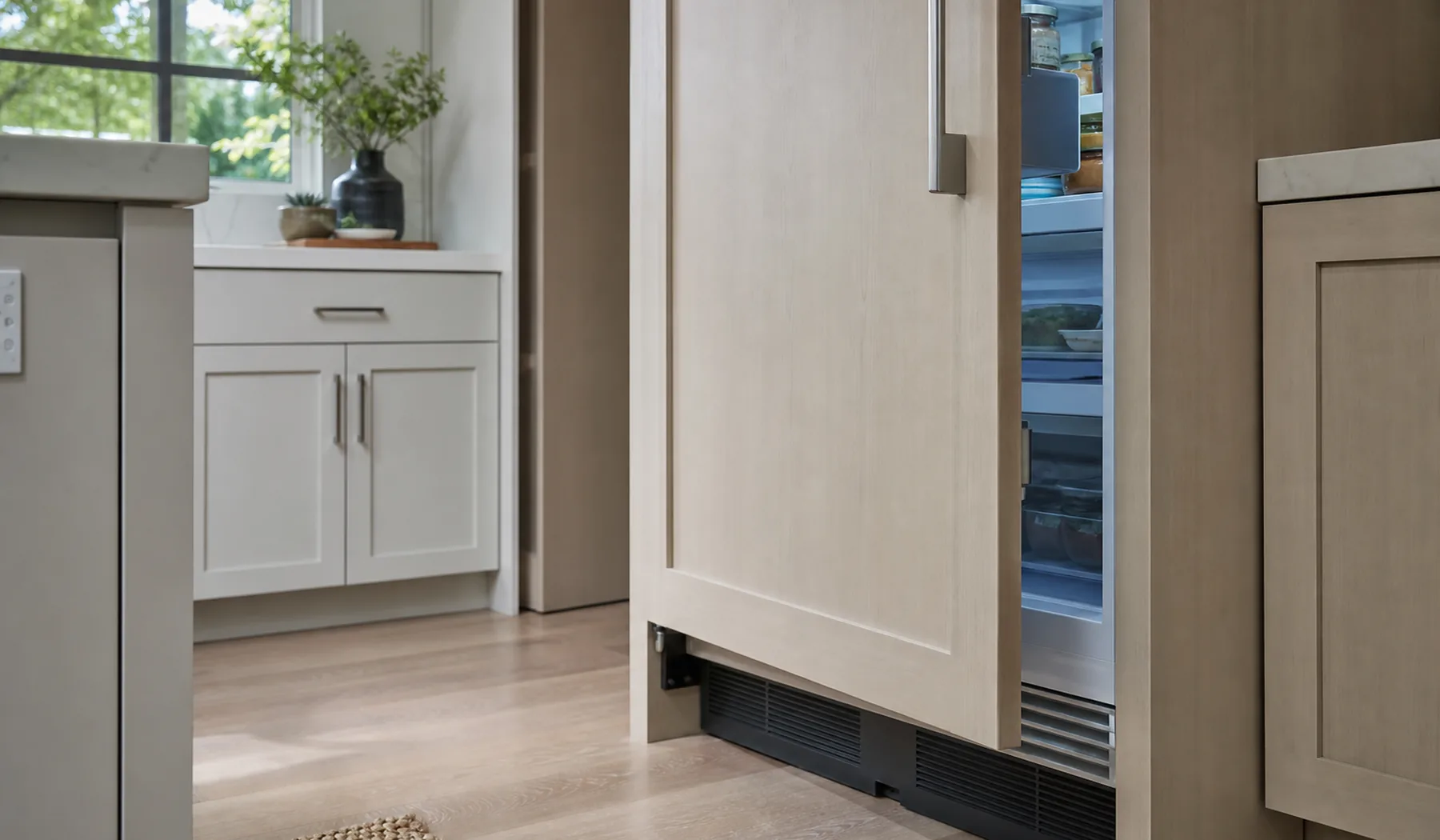
| Custom door panel or overlay | Wide installation view, hinge reveal check and panel weight symptoms | Plan protected access before approving gasket, hinge or pull-out work. |
| Tight lower grille or toe-kick | Grille, floor transition and model tag area | Allow extra time for airflow checks and avoid forcing trim. |
| Water line behind built-in unit | Water source location, slack estimate and leak location if present | Do not pull the unit until water and floor protection are planned. |
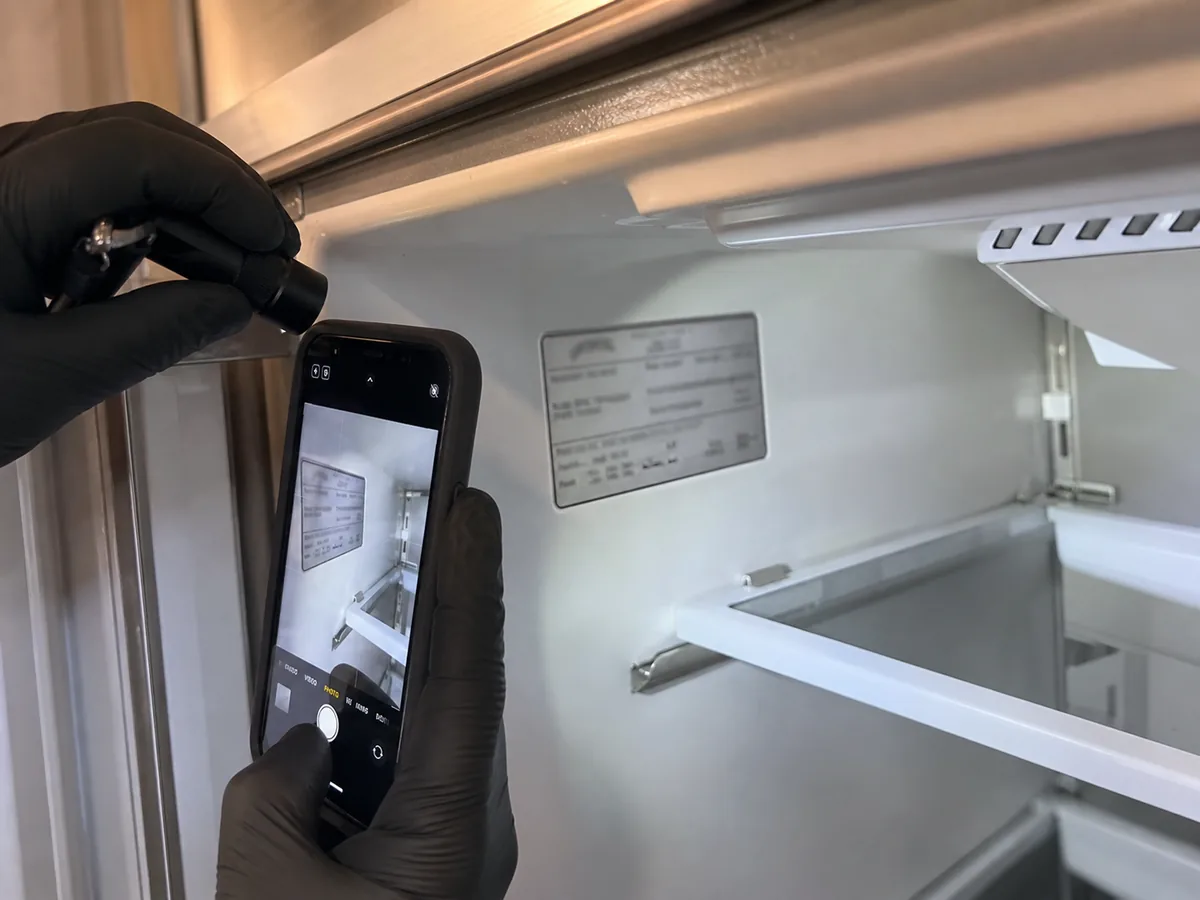
| Older 600/700 series installation | Serial tag, temperature pattern and cabinet clearance | Confirm part path before discussing replacement or sealed-system work. |
| Hillside or gated access window | Neighborhood, parking and staff/property-manager contact path | Route the visit with a realistic arrival window and access notes first. |
Repair path, planning range and proof required
| Repair path | Planning range | What must be proven |
|---|---|---|
| Diagnostic / service call | $195-$285 | Model, temperatures, airflow, door seal, alarm or display state. |
| Gasket, frost line or hinge correction | $520-$1,150 | Gasket profile, cabinet pressure, hinge alignment and frost location. |
| Ice maker or water path repair | $310-$985 | Water pressure, fill tube, valve response, filter status and module timing. |
| Evaporator or condenser fan motor | $365-$815 | Fan movement, bearing drag, coil load from coastal air and amp-draw evidence. |
| Control, sensor or thermistor path | $395-$1,450 | Electrical proof, error history, thermistor readings and serial range. |
| Compressor or sealed system | $1,850-$4,400 | Amp draw, condenser airflow, pressure evidence, leak suspicion and cabinet access conditions. |
Planning ranges are published for decision support. The final quote depends on model, serial range, part availability, cabinet access and diagnosis.
What not to approve before diagnosis
- A compressor or sealed-system replacement from a symptom description alone.
- A control board before the model/serial range and electrical evidence are checked.
- A cabinet pull-out before floor protection, water/electrical slack and panel clearance are documented.
- A full replacement recommendation without comparing repair range, part lead time and cabinet disruption.
Access window and route planning
A useful private-service page is operational. It asks who can open the gate or door, where the vehicle can park, whether staff or a property manager should receive arrival updates, and whether the appliance area is reachable without moving fragile items. These facts make the appointment more reliable without making privacy claims the operator cannot prove.
Upper Hillsborough and hillside routes can require wider arrival windows. Lower Hillsborough may route faster, but an older built-in or custom panel can still require protected access planning.
Preparation checklist
Have the model tag, temperatures, visible symptom, wide installation context and a short history ready. Mention power events, filter changes, cleaning, remodeling, resets or another technician's previous quote. Clear the work area but do not remove custom panels. The broader estate service protocol describes how those details shape the visit itself.
- Confirm model and serial details before the visit.
- Record fresh-food, freezer or wine zone temperatures.
- Record frost, water, alarm or grille condition.
- Identify parking, gate or staff contact path.
- Keep the appliance powered unless safety requires otherwise.
Same-day and next-day dispatch note
Same-day is realistic for some diagnostic visits when evidence arrives early and the route window allows it. Next-day is often safer when protected pull-out, model-specific parts, staff coordination or water-line access must be confirmed. The page should set that expectation rather than promising every emergency can be solved immediately. When the details are assembled, the contact and booking page explains how intake actually runs.
How to prepare your home for a Hillsborough Sub-Zero visit
Practical household coordination that keeps an estate Sub-Zero appointment on time and to one trip.
- Confirm model and serial. Read the tag in advance so the right parts can be checked before dispatch.
- Record temperatures and symptom. Note fresh-food, freezer or wine-zone readings and the visible problem.
- Clear the area. Move fragile items, keep pets away and do not remove custom panels.
- Arrange access. Share the gate code, parking spot and a staff or property-manager contact.
- Keep it powered. Leave the unit running unless safety or food protection requires otherwise.