
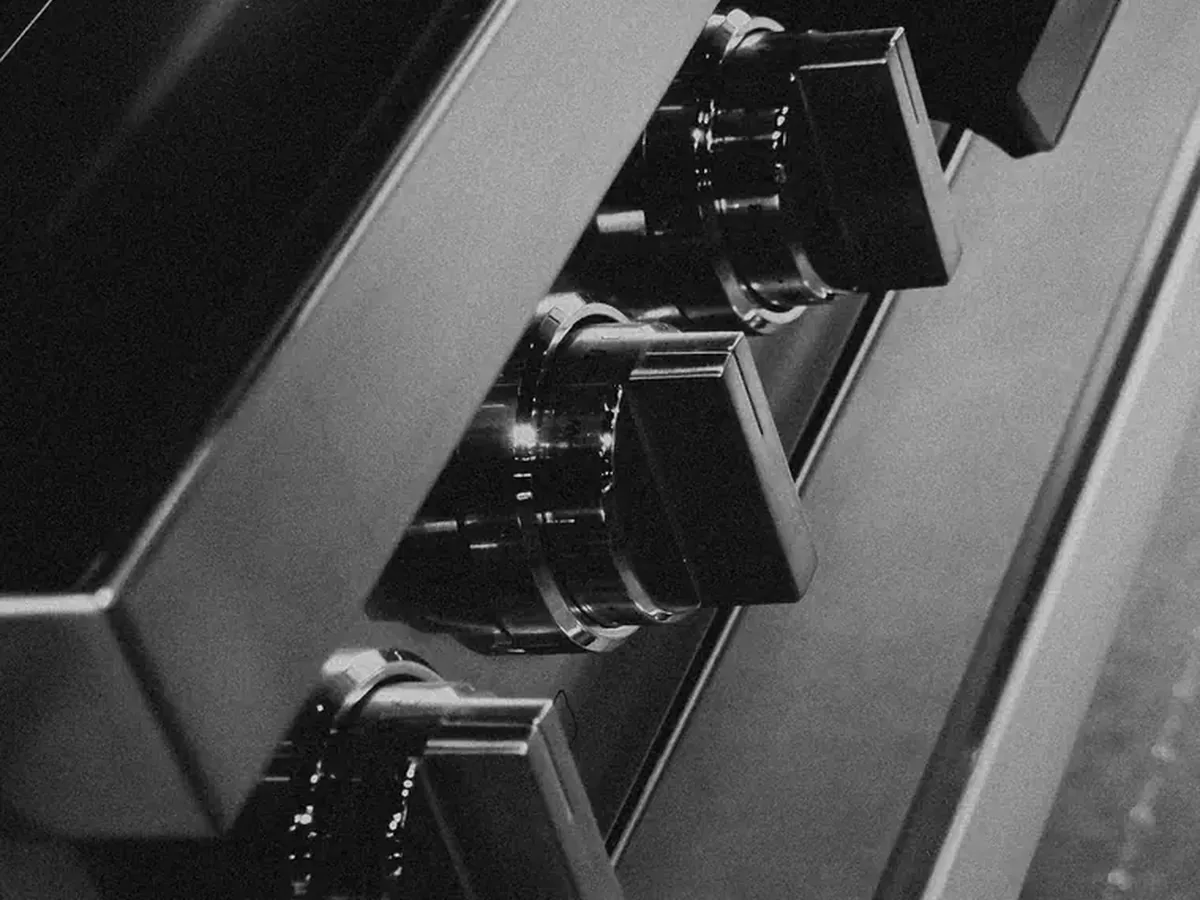
It is one of the most common Wolf cooking calls we get from Hillsborough homes: the burner clicks and clicks but is slow to catch, and it is always worst on the first cook of a cool, damp morning on a wooded lot.
Nine times out of ten it is not the expensive part you are picturing. Here is what is actually happening and how it gets sorted.
Why the morning damp causes it
Hillsborough's oak-shaded lots and ridge-cooled mornings leave a lot of moisture in the air overnight. On a sealed-burner Wolf range that moisture settles under the burner cap and bridges the spark gap. The igniter keeps firing — that is the clicking you hear — but the gas is slow to light until the area dries out. The effect is most noticeable on a large 48- or 60-inch range where one or two burners get less daily use and stay damp longer.
What you can check first
Lift the burner cap, let the burner air-dry, and make sure the cap sits flush and square when you set it back. Wipe up any spill residue around the electrode — a crusted spill holds moisture the same way the morning damp does. For a lot of mild cases that is the whole fix.
When it needs a technician
If a burner still chatters once it is clean and dry, the cause is usually a corroded spark electrode or a stuck spark switch — a clean, bounded repair with a genuine OEM part. It is almost never the control board, and we test before we replace anything so you are not paying for a guess. On the larger estate-kitchen ranges we handle the all-gas, dual-fuel and rangetop platforms the same way.
One thing to keep straight
Wolf is the cooking side of the family — ranges, rangetops, cooktops, wall ovens, steam ovens and the like. The built-in refrigeration in the same kitchen is its sister brand, Sub-Zero. We service both, plus Cove dishwashers, so a mixed Hillsborough kitchen stays with one team. But if someone tells you a "Wolf refrigerator" needs a part, that is worth a second look — Wolf does not make refrigeration.